
Inside Matcha: The Seimei Takeover
5th Aug 2026
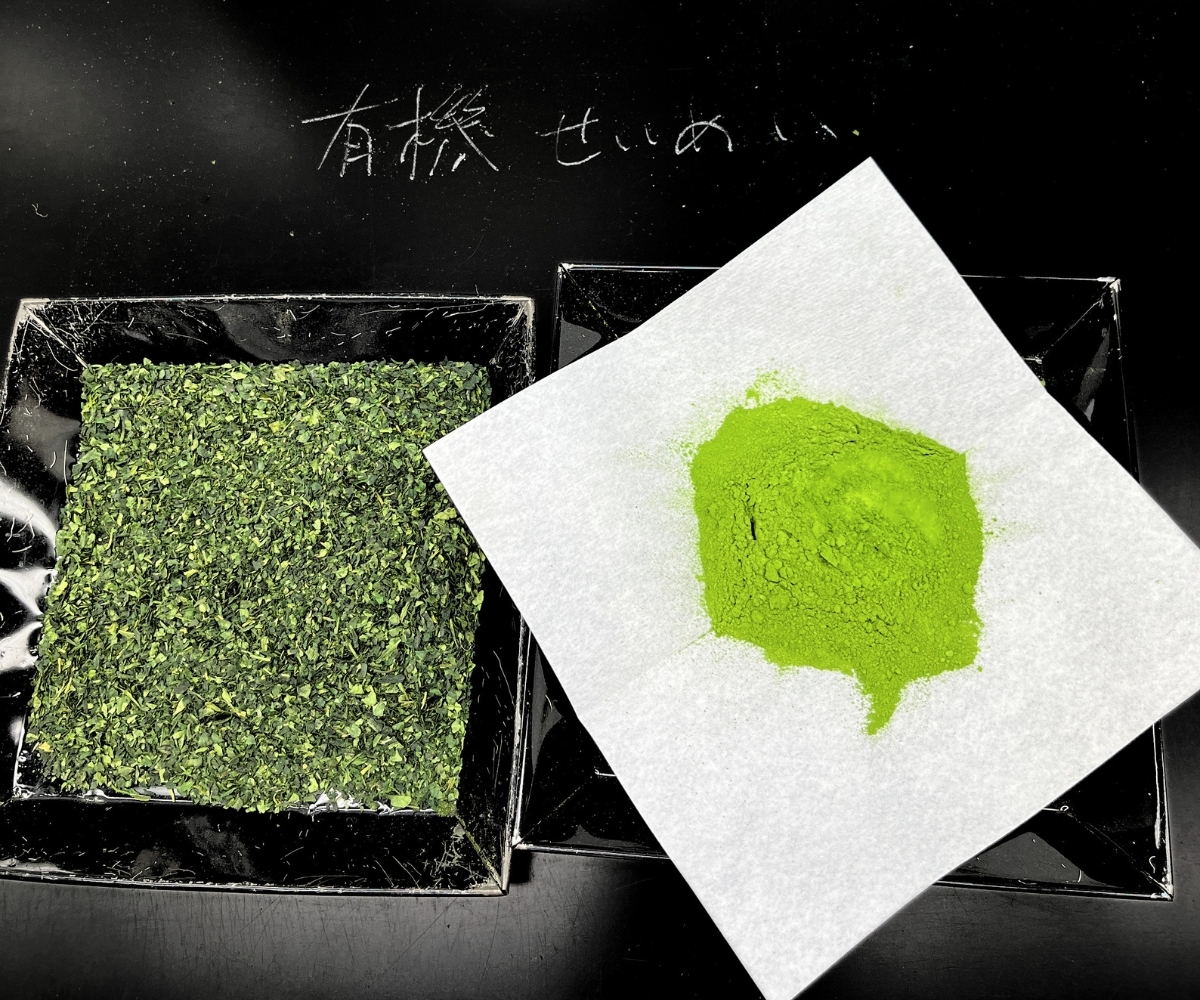
I remember it like it was yesterday. It was 6 November, 2025, the last day of our Kagoshima tea tour. After a detailed tour of JA Kagoshima Chagyo’s production floor, we were brought back to a meeting room and my eyes were transfixed on a 10-metre long blacktop bench. For atop this polished matte surface was a line-up of kyusus and chawans, in front of each a corresponding dish of leaves or grinds, spaced equidistant apart. This can only mean one thing.
Instinctively, my elbows flared and my body weight transferred to the balls of my feet – there was to be no debate who would own pole position at this tasting table.
As the bodies of my once convivial tour mates strewn by the wayside, I first made my way through the senchas. My mind however, was focused on the nine matchas occupying the majority of the stretch. They were deliberately plated by gradation, starting from a conventional autumnal blend, traversing towards an organic first flush in the middle before tapering down to the single cultivars and concluding with what the company regards as its best - the “S” Grade. As good as it was, it wasn’t the S-Grade that got me by the heartstrings, to the left of it was a single cultivar that captured my full and undivided attention.
I'm hooked
I sounded out the hiragana "せいめい" scrawled above that second last bowl in the line-up. Se-i-me-i. Seimei. What captivated me was just as much what was present as what was not. The most savoury matcha I have ever had - an umami uniquely more bone-broth than grassy with the striking absence of any astringency.
I kept returning to this bowl, tasting it over and over, subsequent sips being as captivating as my first. “Muraoka-san, Kawano-san when can I get this shipped to Australia?”
While we wait
Though new to this market, obviously others around the world have gotten wind of Seimei and there was already a waiting list. But while we wait, we may as well get an education, right?
Confusingly, Seimei is a new cultivar with a long history. Whilst it was only officially released in 2020, its origins go back to 1992 when the Fuushan and Saemidori cultivars were first cross-bred. 25 years of trials and selections finally resulted in all that NARO (The National Agriculture and Food Research Organization) aimed for – a leaf that was shade tolerant ideal for producing bright green matcha and gyokuro, pest and frost resistant for higher yields across more geographies, an earlier harvest time to get a jump on the best of the 5th solar cycle and of course – deliciousness. Meticulously worked over by Japan’s largest food research centre, there is of course science behind the latter – compared to Japan’s most dominant tea cultivar, Yabukita, Seimei was bred to have higher L-theanine, an amino acid that helps to generate high umami and sweetness (Kawahara et al. 2024). A lower catechin content simultaneously reduces astringency and dryness.
Because of these superior attributes and the insatiable global thirst for matcha, Seimei is set to overtake Yabukita as Japan’s dominant cultivar. Consider this the calm before the storm.